
Blue Mosque: A Local Guide to Sultanahmet's Crown Jewel
The Blue Mosque pairs soaring domes with twenty thousand hand-painted tiles, and visiting it well is mostly about timing and a little preparation.
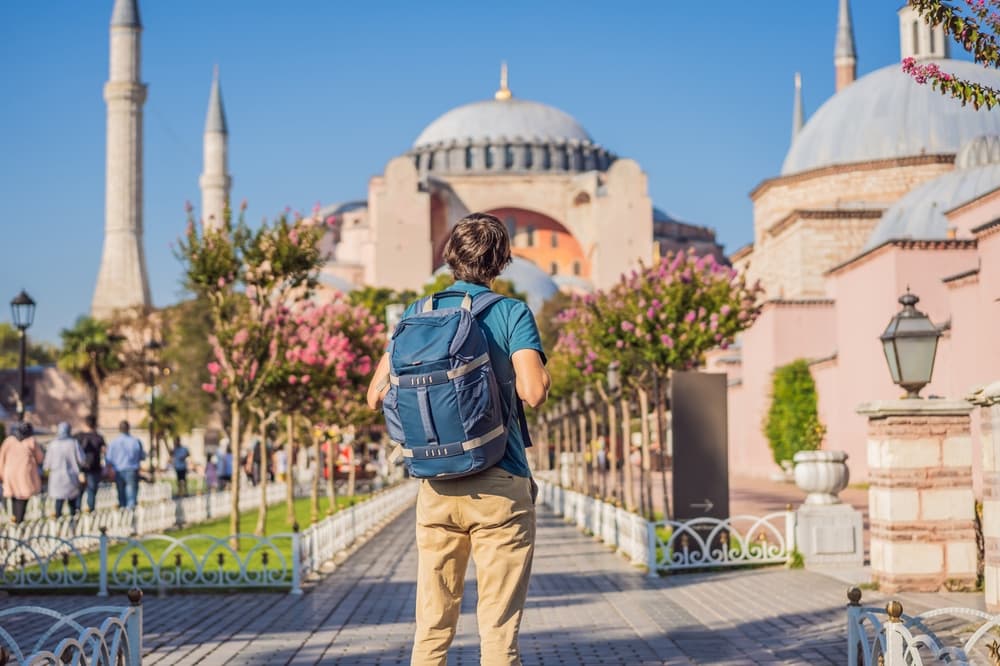
Why the Blue Mosque Earns Its Name
Sultan Ahmed I ordered this mosque built between 1609 and 1616, and his ambition was hardly subtle: he wanted a monument that could stand toe to toe with the Hagia Sophia across the square. The result fuses Ottoman engineering with clear Byzantine echoes, and locals still call it the Sultanahmet Mosque after the sultan who commissioned it so young.
The "blue" in the popular name comes from inside, not out. More than twenty thousand handmade Iznik tiles line the interior, their cool blues and greens climbing the walls beneath a central dome that rises roughly forty-three meters on four enormous columns nicknamed the "elephant feet." Stained glass scatters daylight across the prayer hall, and the calligraphy and chandeliers reward anyone who slows down to look up.
What to Look For Inside
Beyond the tilework, notice how the six minarets set this mosque apart. Most imperial mosques carry one or two, and the choice of six caused a minor stir in its day. The spacious prayer hall can hold thousands of worshippers, so even on a busy morning the room rarely feels cramped once you are through the entrance.
This is still a living mosque, not a museum. Daily prayers take priority, which is part of its charm but also the main thing to plan around as a visitor.
Practical Tips for Your Visit
Entry is free and the mosque sits in the heart of Sultanahmet, an easy walk from Hagia Sophia, Topkapi Palace and the Basilica Cistern. Take the T1 tram to the Sultanahmet stop and you are practically at the door. Most visitors spend thirty to forty-five minutes inside.
Dress modestly: covered arms and legs for everyone, a headscarf for women, and shoes off before entering. If you forget, attendants lend out scarves at the entrance. Photography is fine without flash, but avoid pointing your camera at people in prayer. The mosque closes to tourists during the five daily prayer slots, so going early morning or late afternoon both dodges the crowds and sidesteps those pauses.
FAQ
Is there an entrance fee for the Blue Mosque?
No. Entry is free because it remains an active place of worship, though small donations are always appreciated. You will, however, need to plan around the daily prayer times when the mosque closes to visitors.
What should I wear to visit the Blue Mosque?
Shoulders and knees should be covered, and women are asked to cover their hair with a scarf. Everyone removes their shoes before stepping onto the carpet. If you arrive unprepared, scarves and wraps are handed out free at the entrance.
When is the best time to avoid the crowds?
Aim for the first hour after it opens in the morning, or late afternoon. Steer clear of the windows right around the five daily prayers, when tourist access pauses and lines build up again afterward.